KooeeKeis Australian Cobberdogs ~ Ethical Family Breeder in WA

The Australian Cobberdog Coat Types & Grooming
The coat is a defining characteristic of the Australian Cobberdog and plays an important role in breed evaluations, including Australian Cobberdog Conformation assessments. At KooeeKeis, we place strong emphasis on preserving the correct coat type, as it directly supports the breed’s purpose as a companion, therapy, and assistance dog.
The ideal Australian Cobberdog coat is a single coat with no undercoat, soft to the touch, luxurious, and smooth in texture. Shedding is very low to non-existent, with minimal odour — a key reason the breed is so well suited to family living and therapy work.
Visually, the coat may appear straight or slightly wavy, always with furnishings. Neither straight nor slightly wavy coats are given preference when judging — texture and movement are far more important than curl pattern.
Highly undesirable coats include:
Tight curls or overly curly coats
Dense, woolly, or rough-feeling coats
Highly wavy coats with excessive bulk
Flat or hair coats that shed and lack furnishings
These coat types do not reflect the true Australian Cobberdog look or function.
Grooming the Australian Cobberdog
The Australian Cobberdog coat should always enhance the dog’s soft, flowing, and elegant appearance without interfering with their ability to perform as a therapy, assistance, or family companion dog.
Ideal Practical Coat Length
A well-maintained coat balances beauty with function. The practical ideal coat length for an Australian Cobberdog is:
7–12 cm (approximately 3–5 inches) on the body
This length:
Showcases the breed’s signature soft texture
Allows natural coat movement and flow
Reduces matting and maintenance
Supports hygiene and everyday living
Shorter trims may be used where required, particularly for working dogs, without losing the overall breed look.
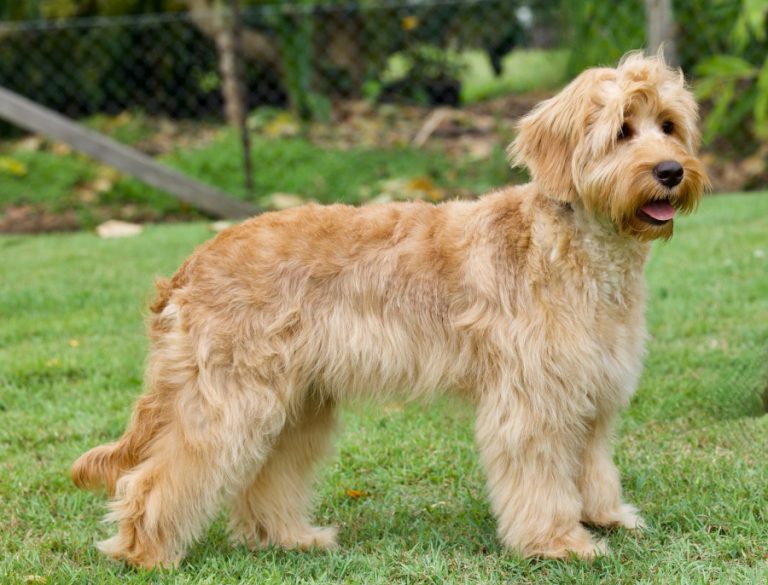
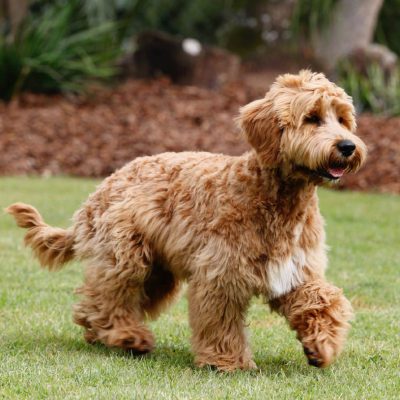
Key Points for the True Australian Cobberdog Look
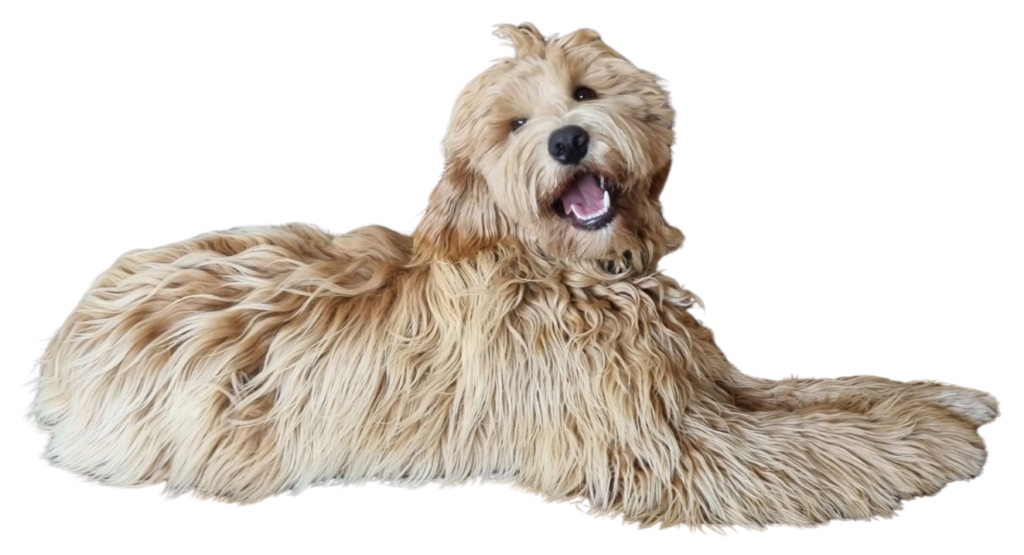
The coat should:
Move naturally with the dog (flow)
Show softness and texture
Look fresh and well cared for — never heavy, flat, or matted
Too short:
Loses the flowing movement that defines the breed
Too long:
Becomes impractical
Mats easily
Hides the athletic structure
Can look unkempt or interfere with work equipment
Grooming for Real Life
While a full, natural-length coat is stunning and ideal for assessing correct texture, most working or family Australian Cobberdogs benefit from light trimming.
In real-world settings, a tidy, slightly shorter coat is often more practical — and closer to the true ideal — than an excessively long, show-style coat.
Real-World Considerations for Coat Length
For therapy and assistance dogs, practicality is essential. Dogs wearing vests or harnesses, or working closely with potentially immunocompromised clients, benefit from a shorter, well-managed coat.
A shorter coat:
Traps less debris
Is easier to keep clean and sanitised
Dries faster after bathing
Is less likely to tangle or catch in equipment
For family pets, easy maintenance is equally important. Most families cannot manage daily intensive grooming, and the Australian Cobberdog coat should support — not complicate — everyday life.
The overall impression should always remain luxurious and flowing, with a straight or soft wave, but never at the expense of comfort or practicality.
Recommended Coat Length Guide
Body: 7–12 cm (3–5 inches)
Underbelly & hygiene areas: approximately 1–2 cm
This maintains cleanliness while preserving the breed’s signature look.
The Head & Furnishings
Australian Cobberdogs are recognised by their furnishings and groomed, fresh appearance. The head should look rounded and balanced — never droopy or overgrown.
When grooming:
Follow the natural curve of the jaw and cheekbones
Aim for symmetry and clarity of expression
Recommended lengths:
Ears & tail furnishings (natural): 7–9 cm
Muzzle, mouth, and beard: 1–2 cm
Keeping the muzzle and beard shorter:
Improves hygiene
Reduces infection risk
Keeps vision clear, especially for working dogs
The fur under the bottom lip (beard) should be clipped no longer than 2 cm, with the moustache level with the top jaw line, ensuring a clean and functional finish.

