KooeeKeis Australian Cobberdogs ~ Ethical Family Breeder in WA

Australian Cobberdog Coat Types and Grooming
KooeeKeis Australian Cobberdogs
The coat is one of the defining characteristics of the Australian Cobberdog breed. It is not simply decorative — it reflects breed development, genetic selection, functionality, and overall health.
At KooeeKeis Australian Cobberdogs, our Cobberdogs carry the correct fleece coat, in both straight and soft wavy variations. These coats are low to non-shedding, single coated (no undercoat), and intentionally bred to align with breed expectations outlined in our Australian Cobberdog Overview.
A correct Cobberdog coat should look soft, luxurious and flowing — never heavy, woolly, rough or flat.
The fleece coat is the hallmark of the Australian Cobberdog. It is:
Soft and silky in texture
Light reflective with a natural sheen
Single coated (no dense undercoat)
Low to non-shedding
Very low to no odour
The coat fibre is often compared to Angora goat fibre — fine, silky, and flowing rather than coarse hair. The fibres gather and hang in soft clusters known as staples, which fall in natural waves and swirls.
Unlike traditional dog hair, fleece fibre has greater moisture content and light reflection, which creates the signature soft, luminous appearance.
Most importantly — a correct fleece coat should move with the dog.
For broader breed characteristics, visit our Australian Cobberdog Overview.
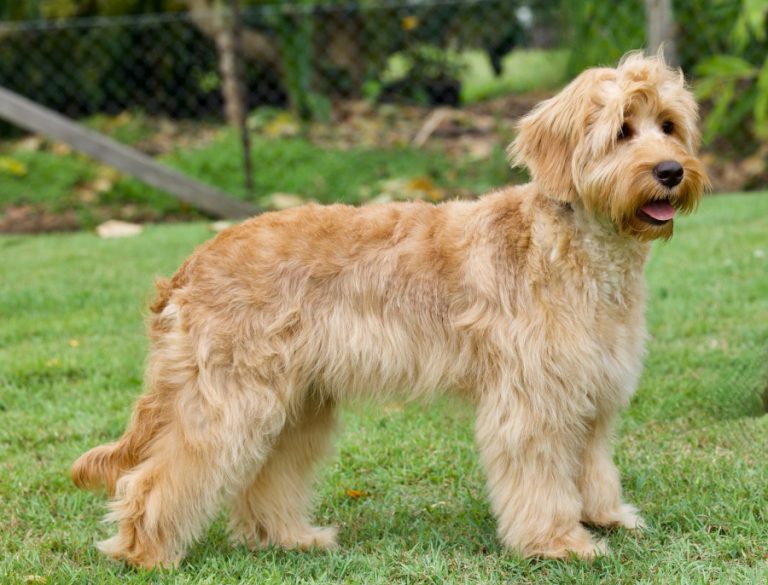
'Straight' Fleece Coat
The straight fleece coat appears visually straight or only slightly waved. It is not flat or hair-like.
Characteristics include:
Smooth, flowing fall
Silky texture
Light natural movement
Furnishings present (beard, eyebrows, leg feathering)
Straight fleece coats are:
Low to non-shedding
Low dander
Often suitable for allergy-sensitive households
Free from strong dog odour
Dirt tends to fall out of the coat once dry, making maintenance practical for family homes.
Neither straight nor softly wavy fleece should be preferred over the other when evaluating correct breed type — both are acceptable within standard expectations.
For insight into the breed’s personality and suitability for families, read Cobberdog Temperament & Personality.
'Wavy' Fleece Coat
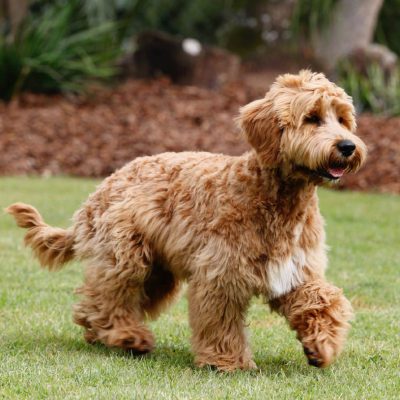
The soft wavy fleece coat hangs in loose, flowing spirals. It is not tightly curled, dense, or woolly.
This coat:
Has slightly more wave than straight fleece
Remains soft and silky
Is low to non-shedding
Maintains furnishings
Has a DNA composition of one straight and one curly coat gene
Soft wavy fleece requires slightly more brushing than straight fleece, as wave can increase the potential for tangling if neglected.
It should never appear:
Tightly curled
Thick and wool-dense
Rough or harsh
Matted or heavy
At KooeeKeis, wool coats, dense curls, flat hair coats, or high-shedding coats are considered undesirable.
Our commitment to structured breeding and health testing supports coat consistency — learn more in Cobberdog Health & Genetic Health Testing.
Coat Colour in Australian Cobberdogs
Australian Cobberdog coats occur in a wide range of beautiful colours.
Solid Colours
Even colour throughout the coat, including:
Raven
Chocolate
Red
Caramel
Chalk
Caramel Ice
Shaded or Patterned Colours
Blended or patterned tones such as:
Black
Blue
Silver
Gold
Apricot Cream
Caramel Cream
Café
Lavender
Parchment
Chocolate Merle
Blue Merle
It is normal for coats to lighten with sun exposure or soften in colour as the dog matures.
Regardless of colour, the defining feature remains the fleece texture and low-shedding quality.

Grooming the Australian Cobberdog
Correct grooming preserves both the breed’s appearance and functionality.
The ideal coat should:
Flow naturally
Show soft texture
Appear fresh and light
Never look heavy, matted, or neglected
Ideal Coat Length for Real Life
While a full natural coat can look stunning, most family and working Cobberdogs require practical maintenance.
Practical Ideal Length:
7–12 cm (3–5 inches) on the body
1–2 cm on hygiene areas and underbelly
7–9 cm on ears and tail (if kept natural)
1–2 cm around muzzle and beard
Beard under bottom lip clipped to no more than 2 cm
Moustache level with top jawline
This length:
Maintains the soft flowing look
Reduces matting
Supports hygiene
Prevents harness tangling
Preserves athletic outline
A coat that is too short loses movement and softness.
A coat that is too long becomes impractical — it mats, droops, traps debris, and hides structure.
Brushing
All long fleece coats require:
Thorough brushing at least weekly
More frequently (3–4 times per week) for longer coats
Daily brushing if maintaining a shaggy, longer look
Brushing prevents matting. Once matting forms, clipping may be the only solution.
Starting grooming early in puppyhood builds positive habits and strengthens the human-dog bond.
If the coat is kept shorter, brushing frequency can be reduced.
Professional Clipping
Clipping every 6–8 weeks is strongly recommended.
Professional grooming typically occurs 5–6 times per year for a medium Cobberdog.
Regular trimming:
Keeps coat manageable
Prevents matting
Maintains hygiene
Supports working roles
Therapy & Assistance Coat Considerations
For therapy or assistance Cobberdogs:
Shorter, practical trims are often preferable
Shorter coats trap less debris
Easier sanitation
Faster drying after bathing
Less interference with vests and harnesses
Temperament suitability for these roles is explored further in Cobberdog Temperament & Personality.
Do Australian Cobberdogs Shed?
Australian Cobberdogs are low to non-shedding.
You may see coat fibres in your brush, but not excessive shedding throughout the home.
Because shedding is minimal:
There is little loose dander
There is very low dog odour
Coats do not release the same volume of airborne allergens
Are Australian Cobberdogs Allergy Friendly?
Many families seeking an allergy-friendly dog choose the Australian Cobberdog.
Low shedding reduces airborne dander, which is often the primary trigger for allergy sufferers.
However, no dog is completely hypoallergenic.
At KooeeKeis Australian Cobberdogs, we understand that allergies can be a genuine concern. That’s why we offer a simple and reassuring option for families who are unsure.
You are welcome to send us a clean T-shirt. We will place it with our Cobberdogs for several days so it carries their natural coat fiber and scent, then post it back to you. When it arrives, simply wear the T-shirt for 20–30 minutes in your normal home environment. For most people, any allergic response will become apparent within that time.
This approach allows you to assess your sensitivity calmly and privately before making a commitment.
It is also important to remember that some individuals react to saliva rather than coat fiber, which is why careful consideration and exposure is always wise before welcoming any dog into your home.
The KooeeKeis Coat Standard
At KooeeKeis Australian Cobberdogs, we prioritise:
Correct fleece texture
Low to non-shedding coats
Soft movement and flow
Functional, real-world grooming suitability
While coat is a defining feature, the heart of the breed remains its temperament and connection with people — as outlined in our Australian Cobberdog Overview.
