KooeeKeis Australian Cobberdogs ~ Ethical Family Breeder in WA

Socialisation Is Important
Why Socialisation Matters
the simple message is this:
whatever a puppy has never experienced in a positive way before 14-16 weeks of age
is likely to cause fear later!
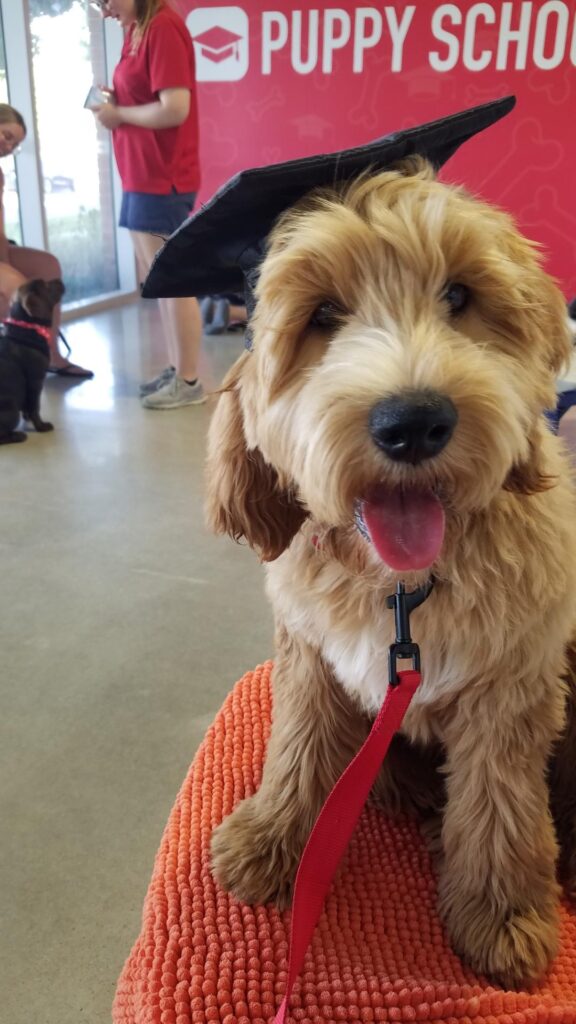
This brief time is called the sensitive period. It’s when they soak up sights, sounds, smells and new experiences, and say, “this is what my life will contain, and it’s all good”.
Puppy preschool is an integral part of this, by encouraging dog sociability. Just as important is making sure that your puppy experiences what you do. They need to meet lots of different people, go to a variety of places and see, small and hear a wide range of stimuli.
In the process they normalise these experiences. That way, their life becomes exactly as they expect it to be, and it’s a fund one.
Now contrast all this with the puppy who’s left at home. The lack of dog socialisation makes them fearful of other dogs, so that in time they learn to keep them away using aggression. They rarely play with strange dogs, and instead to try to avoid them.
The lack of environmental exposure at the critical time makes them afraid of the world. Anything outside their narrow social upbringing now gives them fear and anxiety. This might be strangers, cars, crowds or (highly embarrassingly) people who look different.
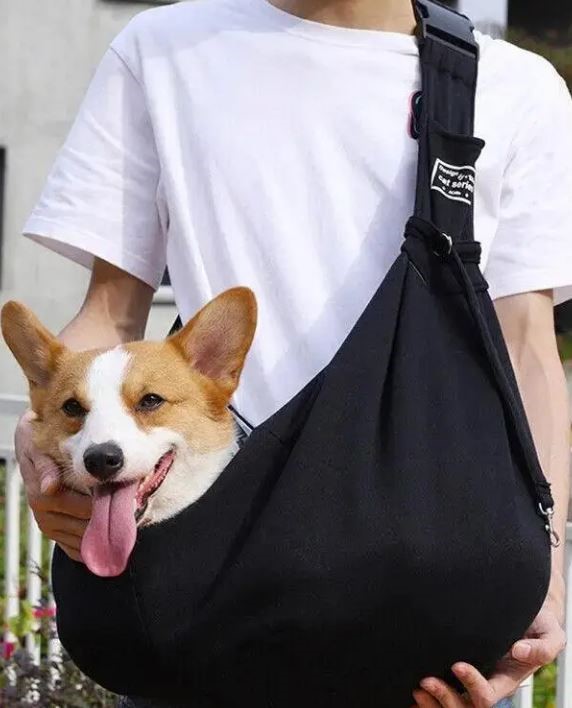
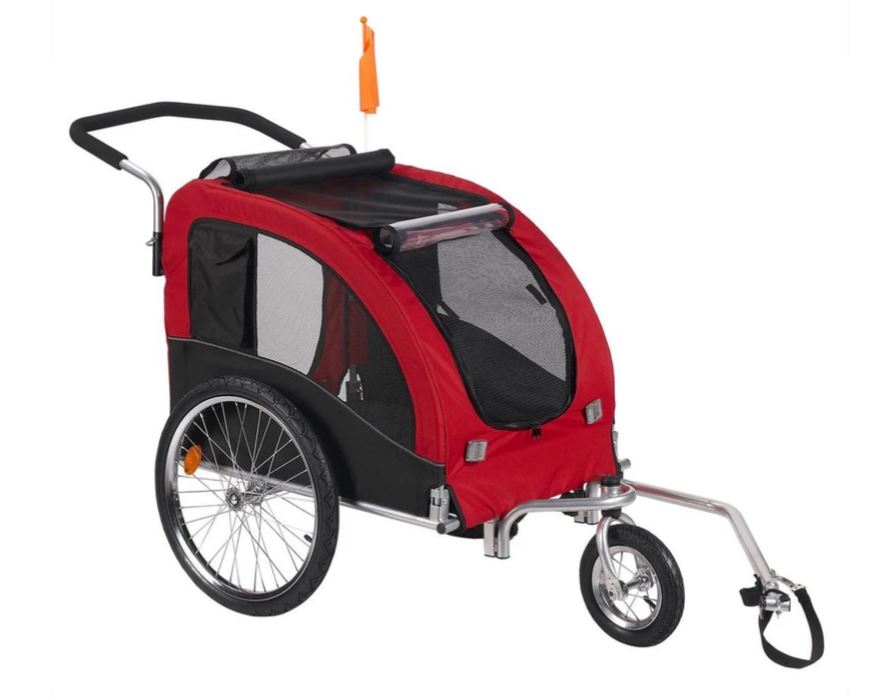
Before you start: YOUR PUPPY IS NOT FULLY VACCINATED .. KEEP THEM OFF THE GROUND. Here at KooeeKeis Australian Cobberdogs we use and highly recommend, dog prams or trailers, carry sling and a waterproof mat to sit on.
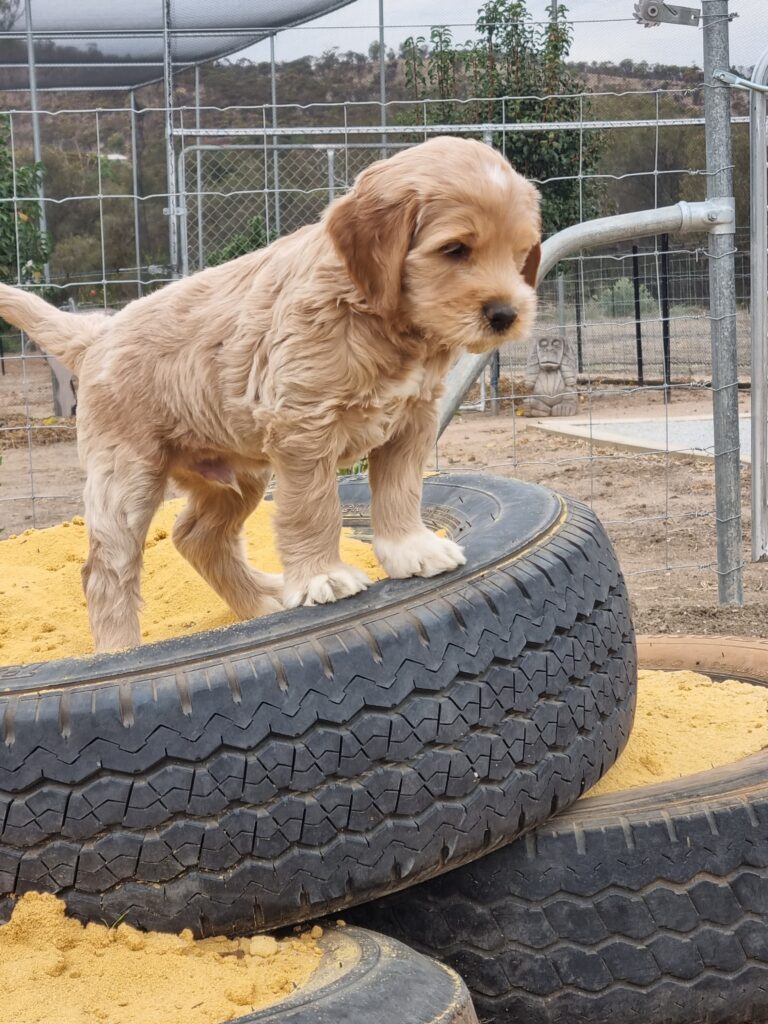
Have a look at this checklist of recommended positive experiences for puppies. Watch this space a PDF will come soon … we are constantly (weekly) updating our website, thank you for your patience.
As you do, think how many of these things we can still do easily.
Our puppies are raised in our family home, weeks 1 – 3 they are in our lounge room, exposed to normal daily activities, TV, chatter, laughter (lots of that) dishes clanging, vacuum cleaners, washing machine … yep just a busy household going about their business.
From 4 weeks of age your puppy goes for a daily walk around our streets and parks in a puppy pram. Then taking turns a couple at a time will sit with us on a waterproof blanket under a shady tree in the park and watch life go by. At 5 weeks of age, they will forfeit one walk and go for a short ride in the car.
It will be impossible to cover every point on this list; focus on the experiences that your puppy needs to be comfortable with and don’t worry about the rare or unlikely ones unless you have plenty of spare time.
There are five check boxes, just get in as many as you can. Many of these you can do or simulate at home but I have no faith in sound recordings as a substitute for real sounds. Remember that each exposure needs to be a happy one. You can probably tick off 3 to 4 off your list just by making sure your puppy goes where you do as much as possible.
During walks, ask well-meaning people of all ages, sizes and appearances to make friends with your puppy. I would avoid allowing them to touch puppy, just chat to him.
Take the time to also teach your puppy to be able to be alone without anxiety. This must be a gradual process, often helped by crate training. Here at KooeeKeis Australian Cobberdogs your Puppy has been introduced to a crate from 4 weeks old. All puppies have their own individual crate for training in their playpen.
Remember: every experience must be a positive one. Make sure your puppy stays relaxed throughout and don’t overwhelm them with too much at once.
A Quick Word on Vaccinations
Your puppy has been wormed fortnightly since they were 2 weeks old.
Suggested Vaccination Schedule
1st C3 – 6 weeks old (while with us at KooeeKeis Australian Cobberdogs)
Your puppy requires a C3 vaccination to protec t them against canine parvovirus, distemper and hepatitis viruses. All our puppies have a thorough Vet check at this appointment.
2nd C5 – 12 weeks old
This can either be the C3 or C5 vaccination. We highly recommend the C5 vaccination to ensure that your pet is protected against the highly contagious Canine Cough or even better the C7 vaccination so they are ALSO vaccinated against Leptospirosis. Discuss this with your vet. If you are a Guardian Family we will guide you on what we prefer.
Although your pup is not fully vaccinated, it is important to start taking him/her out for walks BEFORE the final booster. We are over cautious and do not allow them to walk on the ground yet, we still use pram, hold them, trolleys etc to take advantage of this socialisation period.
3rd C5 – 16 weels
Again, this can either be the C3, C5 or C7 vaccination. This is your puppy’s final vaccination but remember that they will not be fully vaccinated for approximately another two weeks. However, socialisation is very important. Stick to roads, pavement or along the shore line on the beach. It is not recommended to take them to a grassed area such as ovals and definitely no Dog Parks yet.
Booster Yearly on anniversary of 3rd Vaccination
Disease Prevention
What are you protecting your dog against with vaccinations?
- Canine distemper virus is a highly contagious, often fatal viral disease spread via nose-to-nose contact with infected animals, or sniffing urine, vomit or faeces from an infected animal.
- Canine adenovirus or hepatitis is a liver disease which spreads to the lymphatic system and damages the liver and kidneys, often contracted by inhalation or ingestion of an infected droplet.
- Canine parvovirus is a viral disease affecting the gastrointestinal tract, bone marrow and lymphatic systems, contracted by contact with saliva, vomit, or faeces of an infected animal and is often fatal.
- Parainfluenza (viral) and Bordetella cause bronchial inflammation, commonly called kennel cough or canine cough, characterised by a sudden onset of a dry hacking cough that sticks around for a week, however, can lead to complications like pneumonia.
New owners of our puppies are given our 87 point socialisation checklist, that we have already started, so they can continue. If you would like a copy of this document, please email your request hello@KooeeKeis.com.au we are happy to share this information.
The Result of Thoughful Socialisation
When families follow our KooeeKeis socialisation guidelines with consistency and care, the result is a beautifully balanced Australian Cobberdog.
A well-raised Cobberdog is calm, confident and socially intelligent. They are relaxed in new environments, welcoming without being over-exuberant, and responsive to gentle leadership. They recover quickly from unexpected sounds or changes and move through the world with quiet assurance.
This does not happen by chance. It is the outcome of early structured exposure, positive experiences and clear, consistent boundaries — begun by us and continued by you.
Suitable for Companion, Therapy or Assistance Pathways
When the foundation has been laid correctly, an Australian Cobberdog can confidently step into a variety of roles.
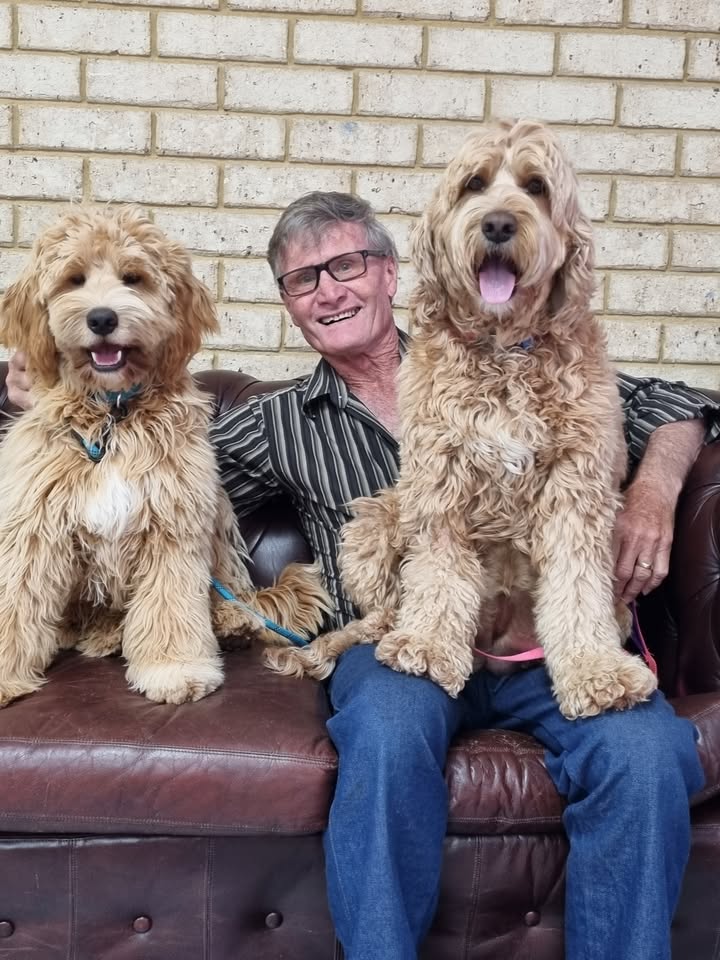
As a Companion, they are intuitive and people-focused. They thrive on connection and naturally attune to the emotional rhythms of their family.
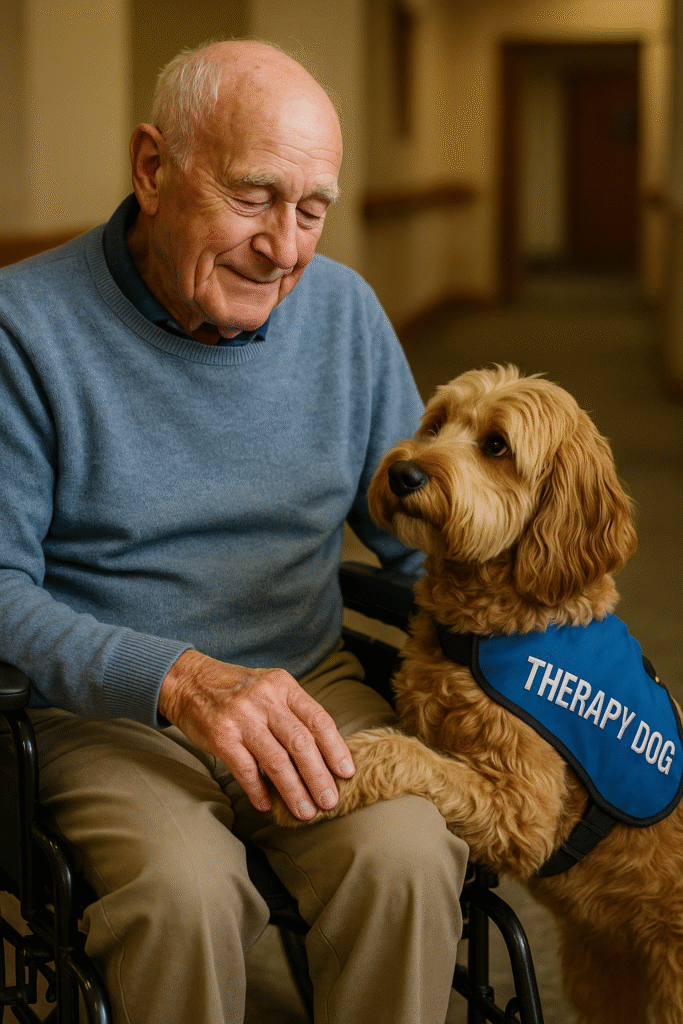
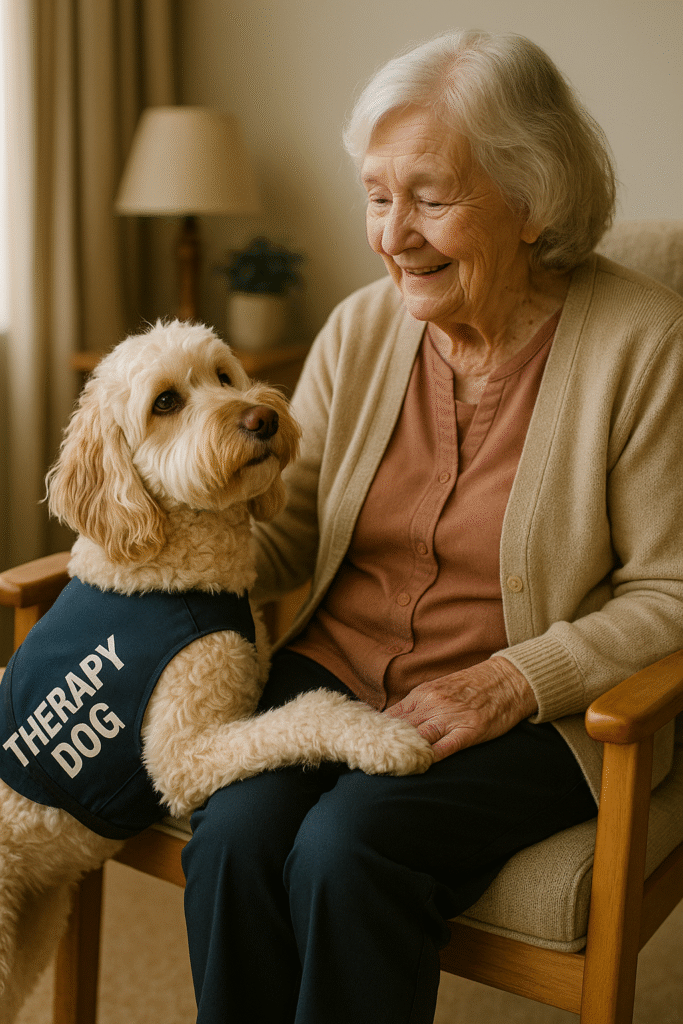
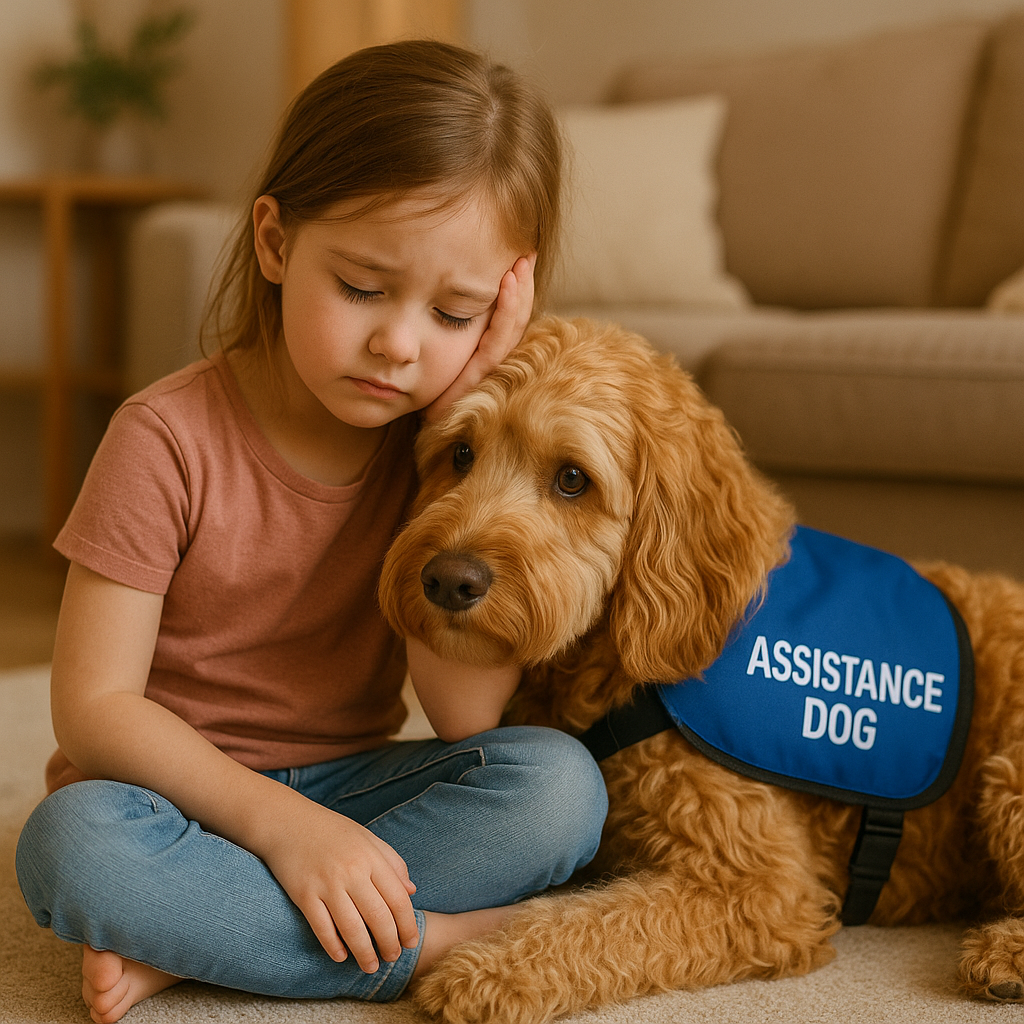
In a Therapy setting, a well-socialised Cobberdog demonstrates steady nerves, soft engagement and the ability to remain composed in unfamiliar or stimulating environments. Their calm presence and emotional sensitivity allow them to offer genuine comfort.
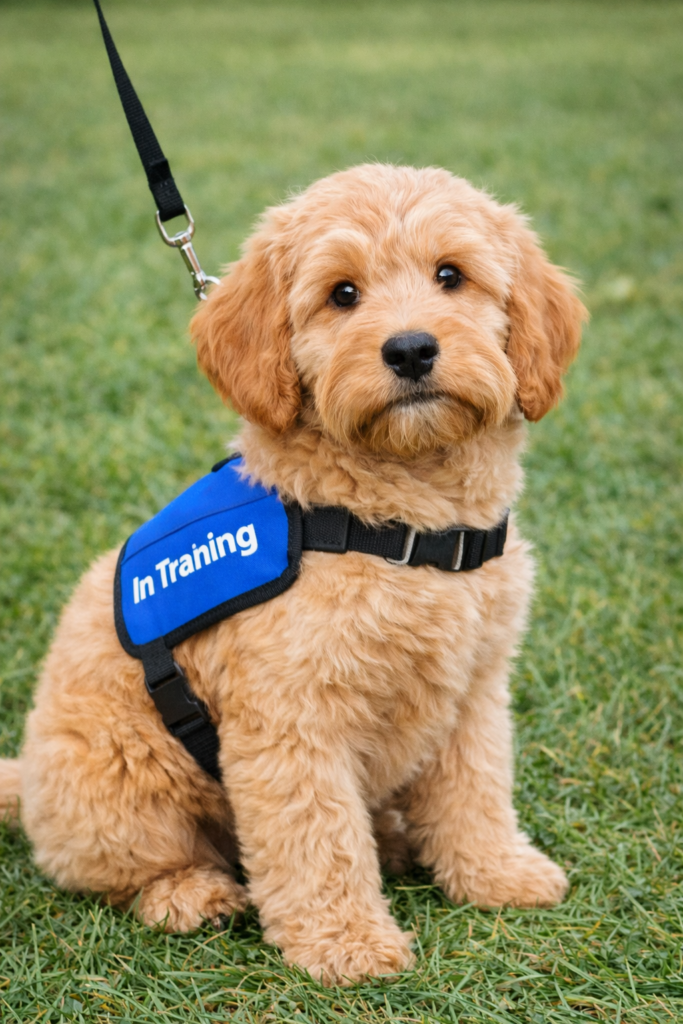
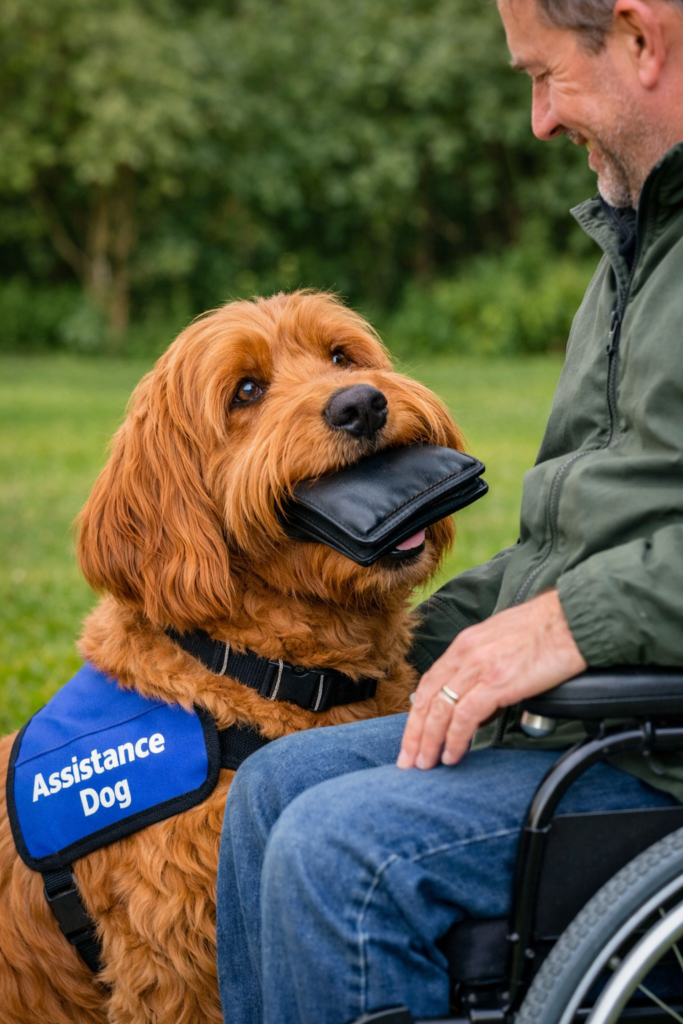
For Assistance pathways, the early groundwork becomes even more important. Confidence, environmental neutrality and resilience are essential traits. When families commit to structured socialisation, consistent training and calm leadership, the Cobberdog’s natural intelligence and willingness to work truly shine.
While not every puppy is destined for formal therapy or assistance work, the behavioural foundation required for these roles begins with exactly the same early principles — safe exposure, stability and thoughtful guidance.
The Groundwork Has Been Done - Now It Is Nurtured
At KooeeKeis, we begin this process long before your puppy comes home. Our puppies are raised in our home, exposed to everyday household activity and gently guided through age-appropriate enrichment.
When new owners continue this journey:
Confidence deepens
Manners become consistent
Emotional regulation strengthens
The human–dog bond becomes secure and respectful
The result is not just a “good dog” — but a dog who is socially intelligent, emotionally balanced and a pleasure to live with.
A Partnership in Raising Excellence
We are incredibly proud of what our Australian Cobberdogs become when breeder and family work in partnership.
A well-mannered Cobberdog does not happen by chance. It is the outcome of thoughtful breeding, structured early raising, and families who take their role seriously.
When that partnership is honoured, the result is a dog who moves confidently through the world — whether by your side as a beloved companion, offering comfort in a therapy setting, or developing further into assistance work.
And that is exactly what we aim to produce.