KooeeKeis Australian Cobberdogs ~ Ethical Family Breeder in WA

Therapy Dog Cobberdog
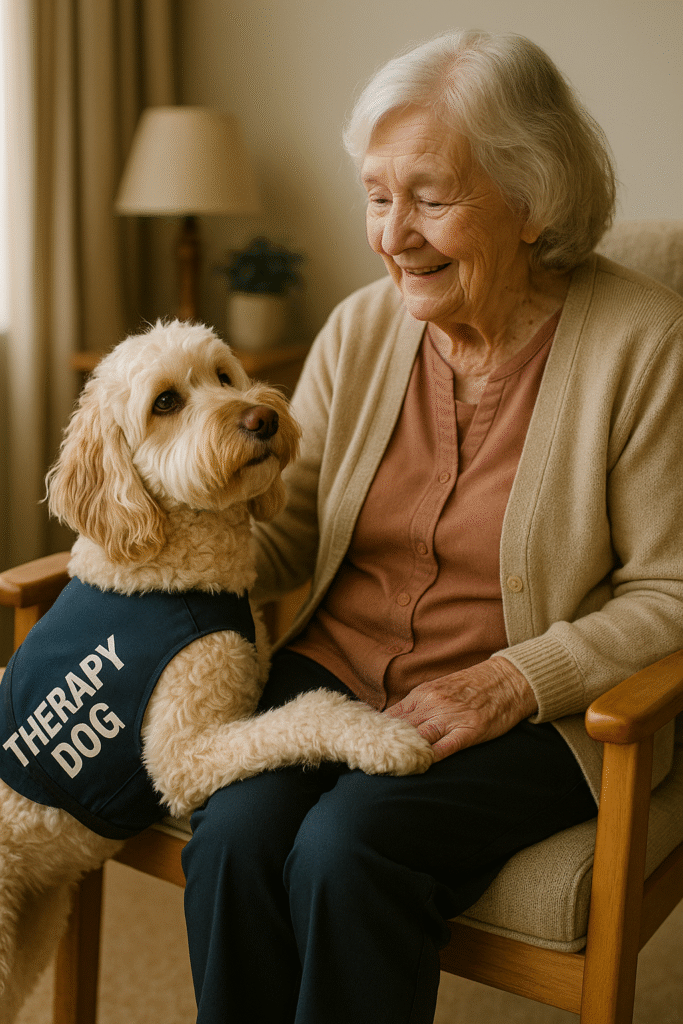
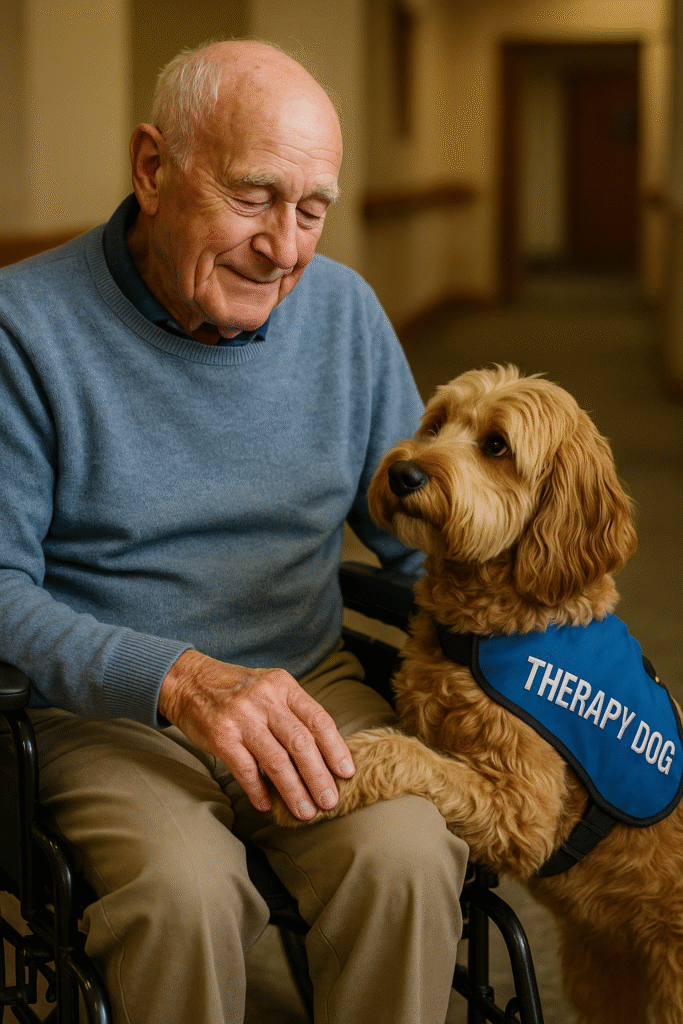
Therapy Dogs in Australia
Why Choose a Therapy Dog Cobberdog?
Here in Australia, a therapy dog is a specially trained companion who works alongside a qualified handler to bring comfort, calm, and connection to people in many different settings. Unlike assistance dogs, therapy dogs don’t have public access rights, but they play a vital role in Animal-Assisted Therapy (AAT) and Animal-Assisted Activities (AAA). Therapy dogs can be found in various settings, including hospitals, schools, and aged care facilities, where they provide emotional support and contribute to the therapeutic process. One popular breed for this role is the Therapy Dog Cobberdog, known for its friendly disposition and intelligence.
Training & Temperament
Therapy dogs are carefully trained and assessed to ensure they are well-mannered, gentle, and happy to work in all sorts of environments. Their calm nature and steady temperament allow them to support people in meaningful ways. Training often includes socialisation with different people and environments, advanced obedience commands, and specific skills for comfort and support, ensuring they can handle unexpected situations with grace. For instance, a therapy dog might be introduced to loud noises or unexpected movements to assess their reactions, ensuring they remain calm and reassuring in high-pressure environments.
Working with a Professional
Every therapy dog has a handler – usually a therapist, healthcare worker, or someone specially trained in animal-assisted services. Together, they create safe and positive experiences for the people they support. This partnership is crucial, as the handler’s knowledge of the dog’s behaviour and the specific needs of the individuals they are working with ensures effective interactions. For example, in a hospital setting, the handler can gauge when a patient may need more engagement or when to step back and allow space for personal reflection.
What They Help With
Therapy dogs aren’t just “visiting pets” – they’re part of a bigger therapeutic plan. In AAT sessions, the dog is part of a structured programme with goals that may be physical, emotional, social, or cognitive. These sessions are tailored to meet the specific needs of each individual, whether that involves encouraging movement for a physically disabled person or providing emotional support to someone dealing with anxiety or depression. For instance, a therapy dog might assist a child with speech therapy by motivating them to speak through interaction.
In AAT sessions, the dog is part of a structured programme with goals that may be physical, emotional, social, or cognitive. These sessions aim to foster growth and healing through the unique bond formed between the individual and the animal.
In AAA settings, the dog may simply be there to share gentle interactions – like being patted, brushed, or talked about – often in schools, community programmes, or aged care homes. The mere presence of a therapy dog can reduce feelings of loneliness and isolation, helping to create a more inclusive environment in these settings.
Where You’ll Find Them
You’ll see therapy dogs at work in:
Hospitals – providing comfort to patients, especially those undergoing long treatments or recovering from surgery. Their presence can help alleviate stress and anxiety during challenging times.
Schools – supporting children with learning or emotional needs, helping to create a safe space for them to express themselves and improve their social skills.
Aged Care Facilities – sparking joy and memories of much-loved pets, often leading to improved moods and increased social interaction among residents.
Private Practices – helping individuals reach personal goals, such as improving emotional regulation or fostering engagement in therapeutic activities.
Why They’re Special
The presence of a therapy dog can:
Ease anxiety, providing a calming influence and helping to ground individuals during times of distress.
Lift moods, often leading to laughter and joy during sessions, which can significantly improve a client’s overall outlook.
Encourage social interaction, making it easier for individuals to connect with others in a non-threatening way.
Provide a sense of comfort and safety, allowing individuals to express their feelings more freely and openly.
